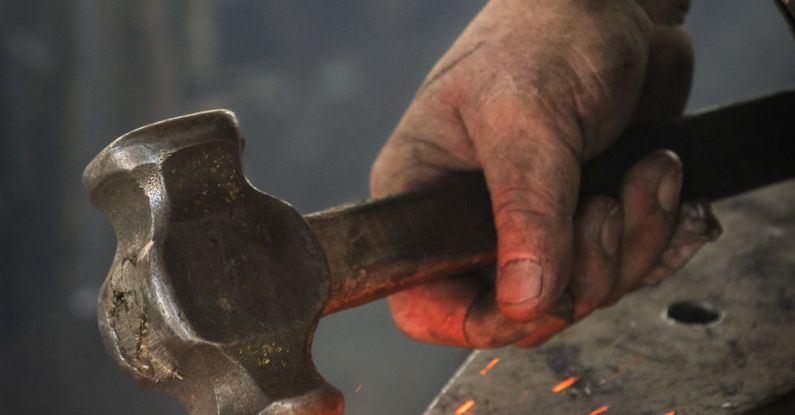
Forging is a manufacturing process that involves shaping metal using compressive forces. It is a crucial technique in the production of various industrial components such as automotive parts, tools, and machinery. There are several types of forging techniques, each offering unique advantages and applications. Understanding these different methods can help manufacturers choose the most suitable approach for their specific needs.
Hot Forging
Hot forging is one of the most common forging techniques used in industry. In this method, the metal is heated to a high temperature to make it more malleable and easier to shape. The heated metal is then placed in a die and compressed using a hammer or press. Hot forging allows for complex shapes to be formed with high precision and efficiency. This technique is ideal for producing parts that require a high degree of strength and durability.
Cold Forging
Unlike hot forging, cold forging does not involve heating the metal. Instead, the metal is shaped at room temperature using high pressure. Cold forging is typically used for softer metals that are more malleable at lower temperatures. This method is ideal for producing small, intricate parts with tight tolerances. Cold forging can also improve the strength and surface finish of the metal, making it a popular choice for manufacturing components such as bolts, screws, and fasteners.
Open-Die Forging
Open-die forging, also known as smith forging, is a technique where the metal is shaped between two flat dies without completely enclosing it. This method allows for greater flexibility in shaping the metal and is often used for producing large components such as shafts, cylinders, and discs. Open-die forging is a versatile process that can accommodate a wide range of metal sizes and shapes. It is commonly used in the production of custom and low-volume parts.
Closed-Die Forging
Closed-die forging, also called impression-die forging, involves shaping the metal within a closed cavity or die. This method allows for more precise control over the shape and dimensions of the final part. Closed-die forging is ideal for mass production of components with consistent quality and dimensional accuracy. This technique is commonly used in the automotive, aerospace, and defense industries to manufacture high-strength parts like gears, connecting rods, and crankshafts.
Press Forging
Press forging is a forging technique that uses hydraulic or mechanical presses to shape the metal. This method offers high precision and control over the forging process, making it suitable for producing parts with complex geometries and tight tolerances. Press forging can be performed at both hot and cold temperatures, depending on the material being used. This technique is widely used in the production of critical components that require superior strength and reliability.
Roll Forging
Roll forging, also known as roll threading, is a forging technique that involves shaping the metal between two rotating rolls. This method is commonly used to produce long, cylindrical parts such as shafts, axles, and bolts. Roll forging offers high productivity and efficiency, making it a cost-effective option for mass production. This technique can also improve the mechanical properties of the metal, resulting in parts with enhanced strength and durability.
In conclusion, forging is a versatile manufacturing process that offers a wide range of techniques for shaping metal components. Each forging method has its own unique advantages and applications, making it important for manufacturers to choose the most suitable technique based on their specific requirements. Whether it’s hot forging for high-strength parts or cold forging for intricate components, understanding the different types of forging techniques can help optimize the production process and ensure the quality of the final products.